Ultraman Mexico
Part Two
Day one showed me that Ultraman was possible.
Day two would show me what it demanded.
“Shut Up and Drink This.”
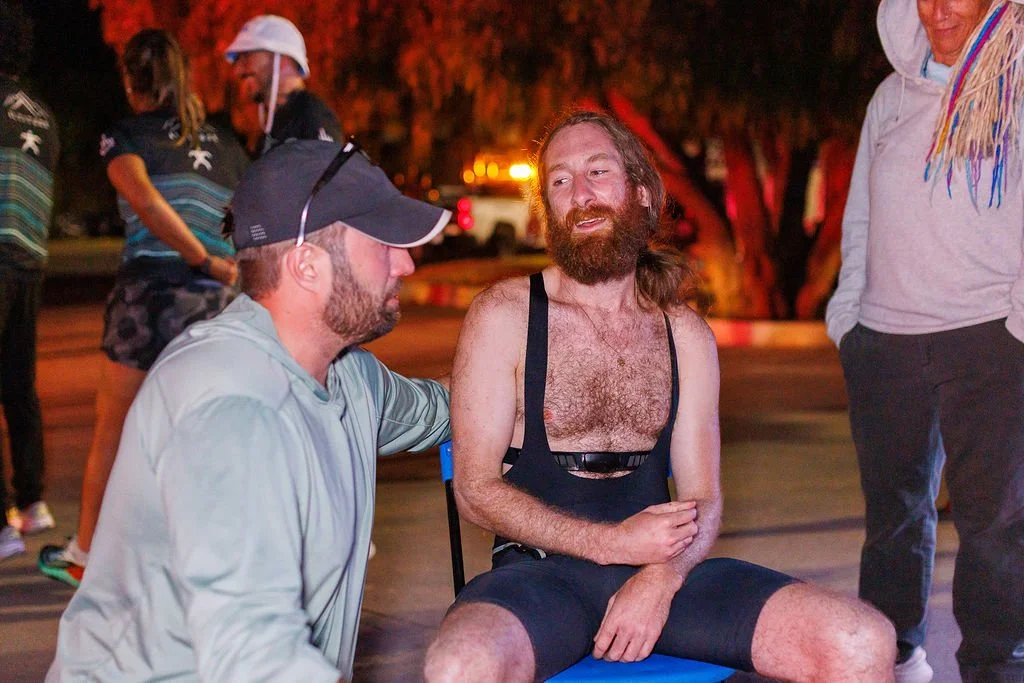
I staggered into the apartment in that familiar post race stupor. Korbin and Renée were buzzing around me, replaying the events of the day in excited bursts. We were on different kinds of highs. I was dirty, nauseous, and ambivalent.
I couldn’t be more proud of what we had done together. Day one of an Ultraman race at high altitude was our first test as a team, and they absolutely crushed it, but I was focused on my own struggle.
Finishing day one proved to me that Ultraman was possible. But day two was something else entirely.
171.4 miles on the bike
7,187 feet of elevation.
60 miles further than I had ever ridden before.
“Tomorrow is going to be close,” I said to no one in particular.
I was scared all over again. Day one had given me a run for my money. I knew it would be hard, and I was still surprised by just how hard it was. Ultraman is truly a different animal.
Korbin stuck a protein shake in one hand and an electrolyte drink in the other.
“Shut up and drink this. You’re wasting energy,” he said. “I’ve got a plan for tomorrow. You just need to ride the bike and tell us how you feel. Let us handle everything else.”
He was right. On day one I spent too much time thinking and asking questions, worrying about things I couldn’t control. In the water I wasted effort when I could have been swimming. On the bike I kept checking in instead of just riding. Tomorrow my only job was to move myself forward.
I needed to trust my crew and put the blinders on.
Two Hours to Day Two
I lay in bed cursing myself and laughing at the absurdity of the situation I’d put myself in.
Here we go again, I said out loud as I dragged myself upstairs.
On the counter was another protein shake and an electrolyte drink waiting for me.
“Hurry up and drink those,” Korbin said. “Breakfast is almost ready.”
My stomach was tight as a fist. I didn’t want any of it, but I got them down.
The Plan
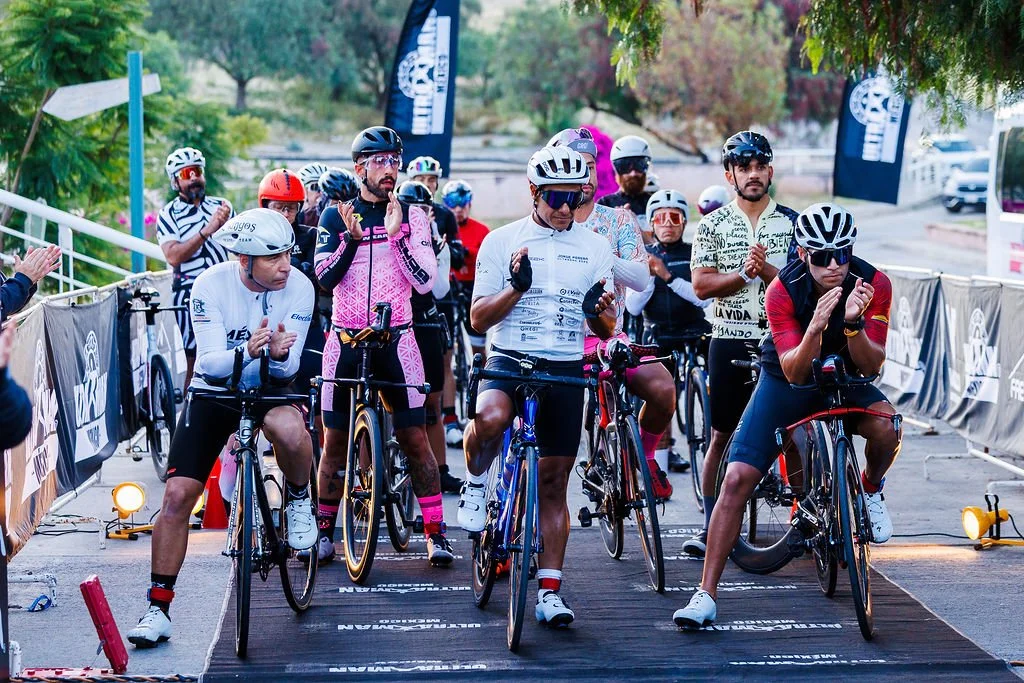
The plan was simple. Most of the real climbing was waiting at the end of the day.
The turnaround sat at the lowest point of the course, and from there it was nearly fifty miles of rolling climbs to the final mountain and the finish. Lowest point to highest point.
We didn’t have the luxury of making up time late. We had to bank it early.
The goal was to stay patient, stay in high zone two, and let the downhills do the work. If everything went right, we could put ourselves in a good position before the grind began.
I assumed we’d roll downhill off the mountain.
We didn’t.
Early Miles
Right away my heart rate was up, my speed was down, and I was already nervous about the plan and how much time I really had to get this done. I did not feel confident.
We moved through the early hilly sections and eventually made our way back onto the highway. I settled into the aero bars and prepared for a long grind. I was holding eighteen miles per hour. Two miles per hour below my goal pace. The final climb loomed large in my mind.
Other riders started pulling away. People I had passed earlier were catching up and going by. Everybody here was incredible. They were prepared mentally, physically, and logistically in a way I had never seen before. I felt like a walk on athlete at a professional tryout.
Eventually they all disappeared ahead of me, and I was alone again. Doubt started creeping in. I wanted to push and keep up, but I had to stick to the plan.
Stay in zone two.
Keep going.
Stay focused.
Direct Follow
The highway sections feel endless, but finally an exit ramp took me back to smaller roads. The relief was short lived. It looked flat, but I was going slower than ever. My computer showed 13 mph, and my heart rate had climbed into zone three.
It felt like I was riding uphill, but the road looked basically flat, maybe a one percent grade at most. Something had to be wrong. I couldn’t be gassed this early.
Behind me, Korbin and Renée followed in the crew vehicle. I could feel them watching me and wondering what was going on.
Why is he riding like this?
Why is he not picking it up?
We aren’t giving ourselves enough time.The next aid station was a planned full stop. I told myself, just get there. Maybe I need Coke. Maybe I need to stretch. Maybe I’m just tired from yesterday. Whatever it is, we’ll solve it at the aid station. Don’t panic.
Can I Have Your Autograph?
I rolled into the station and it turned into an F1 pit stop.
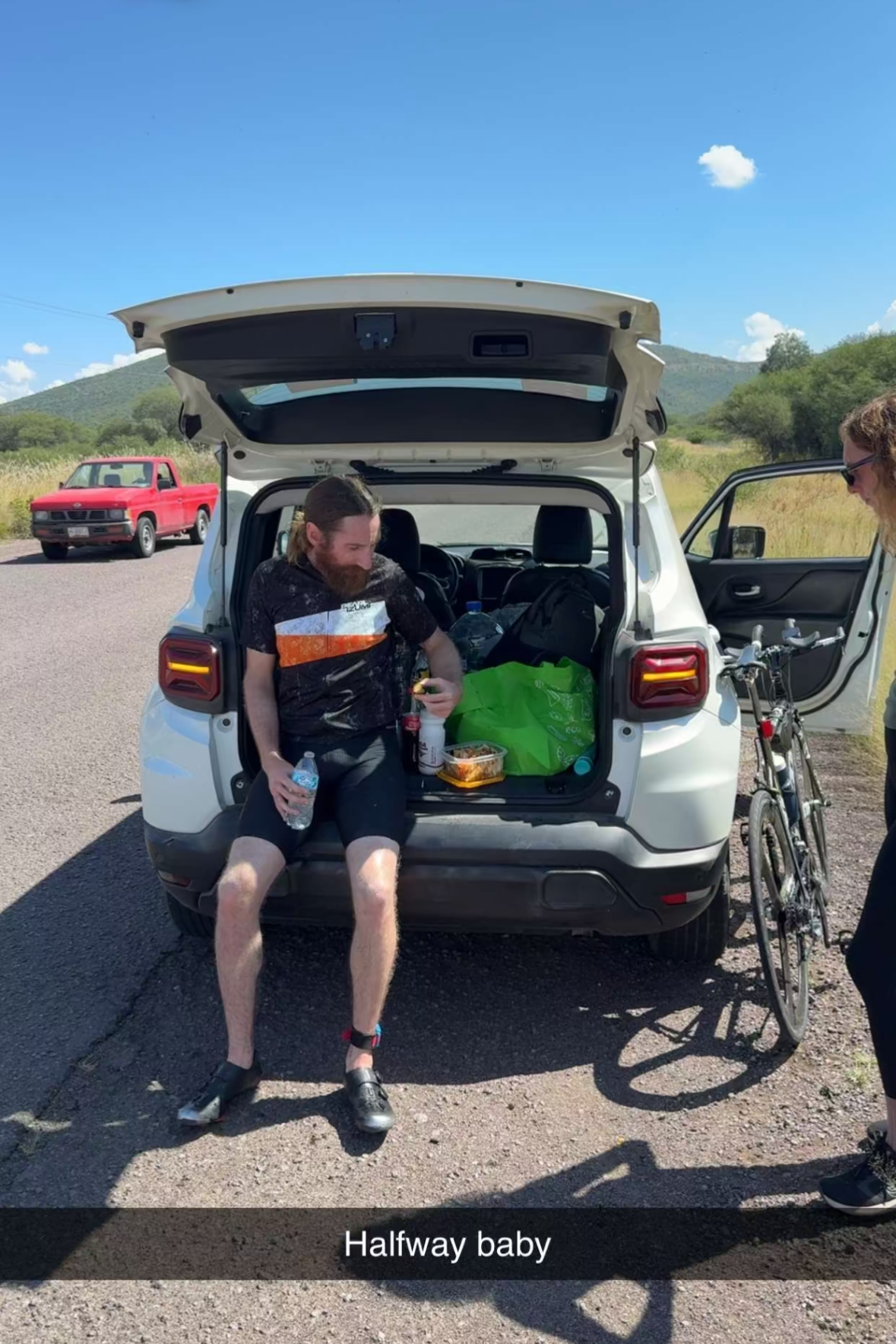
They pulled ahead, parked, and popped the trunk. Multiple cop cars pulled up behind us, and a few people came out from the gas station. I was half clipped in when Korbin grabbed the bike from me and went to work. Renée handled water, food, sunscreen. I sat in the shade of the trunk with a tennis ball against the car, rolling out my right QL, eating, drinking, trying to reset.
Everything was happening faster than I could process. A small crowd formed in a loose circle around us. One of the guys working at the gas station came over and handed me a clipboard and pen. I started writing my name in print before realizing what he was actually asking for. I signed it and wrote a short message about Zacatecas in broken Spanish.
I felt silly. I was some random guy, probably in last place at an Ultraman event, but the gesture fired me up. The generosity, excitement, and camaraderie from everyone in Zacatecas, and everyone involved in the event, was off the charts. It didn’t matter how I felt. People kept handing me energy. I owed it to them to pour out everything I had.
Another Error
Korbin came back from working on the bike.
“Dude, your rear brakes were locked onto your back wheel.”
No wonder I was struggling so much through these flat roads. I knew it felt too hard, but I didn’t want to stop. How much time and energy had I lost over the last ten miles? Would it come back to haunt me on that final climb?
Once we fixed it and I rolled out of that gas station with a free back wheel and some Coke in my system, I felt renewed. I got up to speed and waved my crew ahead. I felt confident again, but in the back of my mind I logged it.
That was another error.
And in my head, there was no room for error.
Free Speed
We reached the stretch where most of the early-day downhill lived: a series of fast descents, a big climb, then a long drop into the lowest point on the course.
I was slightly behind our goal time, but this was the fastest section of the race. If I was going to bank time for the final climb, it had to happen here.
I tucked into the aero bars, pulled my head down, and started counting.
One, two, three, four.
One, two, three, four.
Each count landed with my foot at the bottom of the pedal stroke. I shut everything else out. No planning. No worrying. Just the count and the numbers in front of me.
My heart rate stayed steady in zone two and my speed climbed. I used the count to guide my shifting. If the cadence dropped, I shifted down. If I spun out, I shifted up. I pedaled every downhill until the gears ran out.
I started reeling people in.
As I passed them I called out,
“¡Venga, venga, venga!”
They shouted encouragement back. Crews honked and yelled from the roadside. It felt electric. Everyone was feeding off each other, and we all went faster as we got closer to each other.
For a couple of hours I rode like that, locked into the rhythm of my count. I was passing people steadily and bombing every hill. I even blew past aid stations my crew had set up. I didn’t want to give up any momentum.
When they finally waved me down, they brought me to a full stop.
“You’re crushing it,” they said. “How do you feel? You just passed a ton of people.”
They handed me lunch. Pasta, potatoes, chicken. Another layer of sunscreen.
“You’ve got one good climb coming up,” Korbin said. “Then your last downhill to the turnaround. That’s the next full stop. After that, it’s climbing all the way home.
My Handlebars Look Strange
I was descending, feeling good. My heart rate had been drifting down. With all the downhill that made some sense, but even when I pushed, it was hard to bring it back into high zone two.
My bike computer beeped.
One hundred and twelve miles.
I glanced at the time. It was my fastest Ironman distance ride ever. Faster than anything I had done before, with more climbing than I had ever carried that pace through.
I was stoked. I started thinking about the next aid station. Renée and Korbin were going to be excited by the PR and the time we saved. Everything was finally going to plan.
As I had those thoughts, I felt a strange sensation. Like when you drive fast over a hill and, right as the road drops away, your stomach lifts.
I remember that feeling.
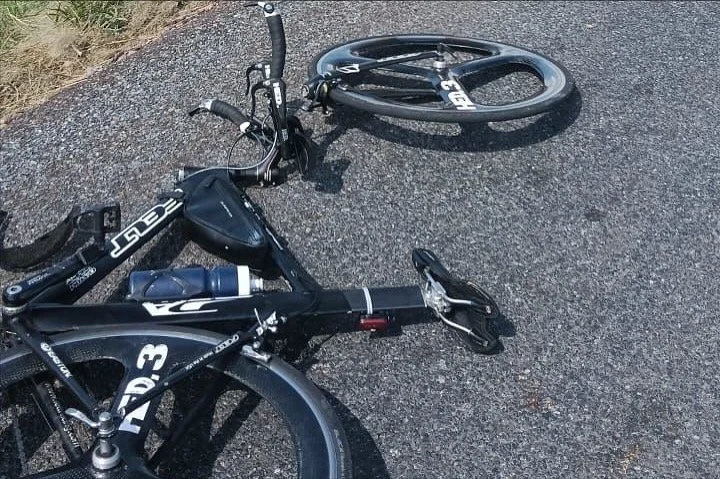
I remember thinking my handlebars look strange.
I remember the sound of asphalt on my helmet.
Then nothing.
Where’s Your Crew?
The next thing I knew, someone was helping me up off the ground.
“You crashed. Are you all right?”
When I stood, a wave of sensation hit me. I went lightheaded. My left arm pinned itself to my side. The pain hadn’t fully arrived yet, but something was wrong.
“I need to sit down.”
They gestured to the ground. I knew if I sat there, I wasn’t getting back up. I started pacing instead.
“Let me see your arm.”
They lifted it straight out in front of me. Then over my head. Then out to the side. The pain cut through everything.
“You can lift it?”
“Yeah.”
They had me do it again. It was excruciating. The shock and adrenaline carried me through it.
Eventually, they let me sit in the back of a police car. Resting my arm in my lap brought a little relief.
“Your bike is broken. Do you have a second bike?”
“No. I have a second helmet. It’s with my crew.”
“Where’s your crew?”
That’s when I realized they were still waiting for me at the turnaround. I didn’t know how much time had passed, only that I should have been there already.
One moment I was thinking about my 112 mile PR and how strong I felt heading into the final stretch.
The next, I was hunched in the back of a police car, trying to figure out how to keep going.
Phil, the race photographer, showed up.
“Dude, what happened?”
“I don’t know. My bike broke. They’re trying to find me another one, but I can’t reach my crew.”
“Where are they?”
“At the turnaround.”
Phil took off for his truck.
All I could do was wait and hope there was a way back into the race.
You Don’t Have to Be Alright
Renée and Korbin were starting to worry when they saw a truck flying toward them.
Phil jumped out.
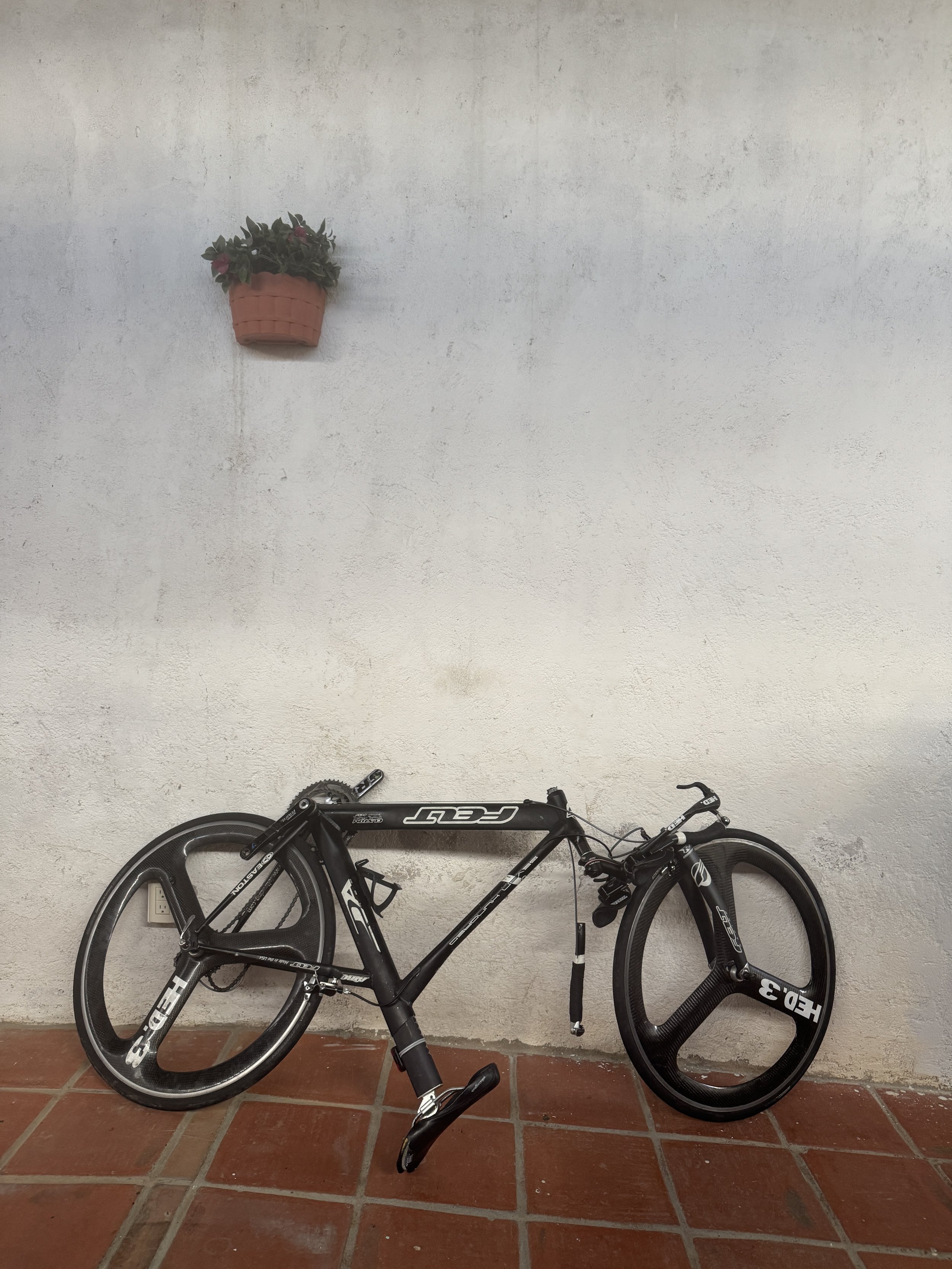
“Lucas is okay. But his bike snapped in half.”
“What do you mean his bike snapped in half?”
“It snapped in half. You need to get back there. Now.”
When I saw them, the emotion finally hit. We had come so far together, and suddenly it felt like it might be over.
I told them they were trying to find me another bike. I told them I was all right.
Korbin looked at my face. Then my shoulders. Then back to my face.
“You’re all right?”
“Yeah.”
“You don’t have to be alright…”
Size 49
Two teams had offered backup bikes.
It was one thing to say I’ll keep going when there was no bike in front of me. It was another thing when they showed up. Now it was real. I was scared.
I knew I couldn’t quit. I knew as long as it was technically possible to go forward, I had to try.
There were two bikes.
One was a Canyon Speedmax. Beautiful. Modern. My size. But we couldn’t get my shoes to clip in.
The other was a size forty nine. No aero bars. Manual shifting. Pedals that worked.
I’m a size fifty eight.
We kept burning time trying to make the Canyon work, but my shoes just wouldn’t clip. Eventually we split up. Korbin took the Canyon and my broken bike to the turnaround to swap pedals.
I put on my little blue backup helmet, climbed onto the tiny bike, and started pedaling. Knees nearly to my chest. Leaning hard onto my right arm.
I must have looked insane.
Renée pulled the Jeep in behind me. It was her first time driving as primary crew. Nothing about the driving was hard. Everything around us had just gone sideways.
For the first time all weekend, we weren’t together.
Keep Me In The Race
As I set off on the small bike, the shock wore off. The adrenaline started to fade. Every time I put weight through my left arm, I could feel the bones in my shoulder rubbing and shifting. It was a sickening sensation.
I was climbing a small hill, unsure how to shift on this bike, and I started sobbing. Big, heaving sobs that made everything hurt more. I knew Renée was behind me. I tucked my head down and to the right, trying to hide my face.
My mind started to spiral.
“I can’t do this. I can’t. My shoulder is broken. It’s broken. This isn’t possible.”
I was crying so hard I was nearly coming to a stop.
Then something in me snapped the other way.
“You want to quit, don’t you?”
“You don’t get to quit.”
“There is no quit in you.”
I stood up on the pedals and tried to sprint through it.
“You’re a Cruz. Nobody else would do this. You’re a fucking Cruz.”
Then I collapsed again.
For ten kilometers I went back and forth with myself. Crying. Then sprinting. Dumping watts into the bike to try to spark adrenaline. Then crashing emotionally again.
By the time I reached Korbin and the others, I was empty. I had proven I could still ride, but I was done. There was no way I could finish the day on that tiny bike. My knees were nearly hitting my chest.
I handed it off and walked away.
I stared as far down the highway as I could and took a few long breaths.
I’m in Mexico.
I’m on this highway.
This is just something that’s happening.
More than an hour had passed since the crash. I thought about the distance left. The time left. The final climb still ahead.
Korbin walked over with the new bike.
“What do you need me to do?”
I knew if I tried to explain, I would break.
So I kept it simple.
“Keep me in the race.”
Fifty Miles to Go
I was at the lowest point in the race. On my third bike of the day. Fifty miles to go. Thousands of feet to climb. At the end of all of it, the same massive mountain that had finished day one and makes Ultraman Mexico so unique.
At that point I could not fathom racing. All I could think was see how far you can go. Every pedal forward was a small victory.
I crested a hill and started descending. I thought, let me see if I can rest my arm on the aero bars. That would be so much more comfortable.
Getting my left arm from the base bar up to the aero bar was a sickening experience. I could feel and almost hear the bones scraping and shifting. Once the arm was resting on the pad, though, it stopped.
I leaned most of my weight onto my right side and used my torso to keep balance. The left arm just sat there. I hit the electronic shifter button on that side when I needed it.
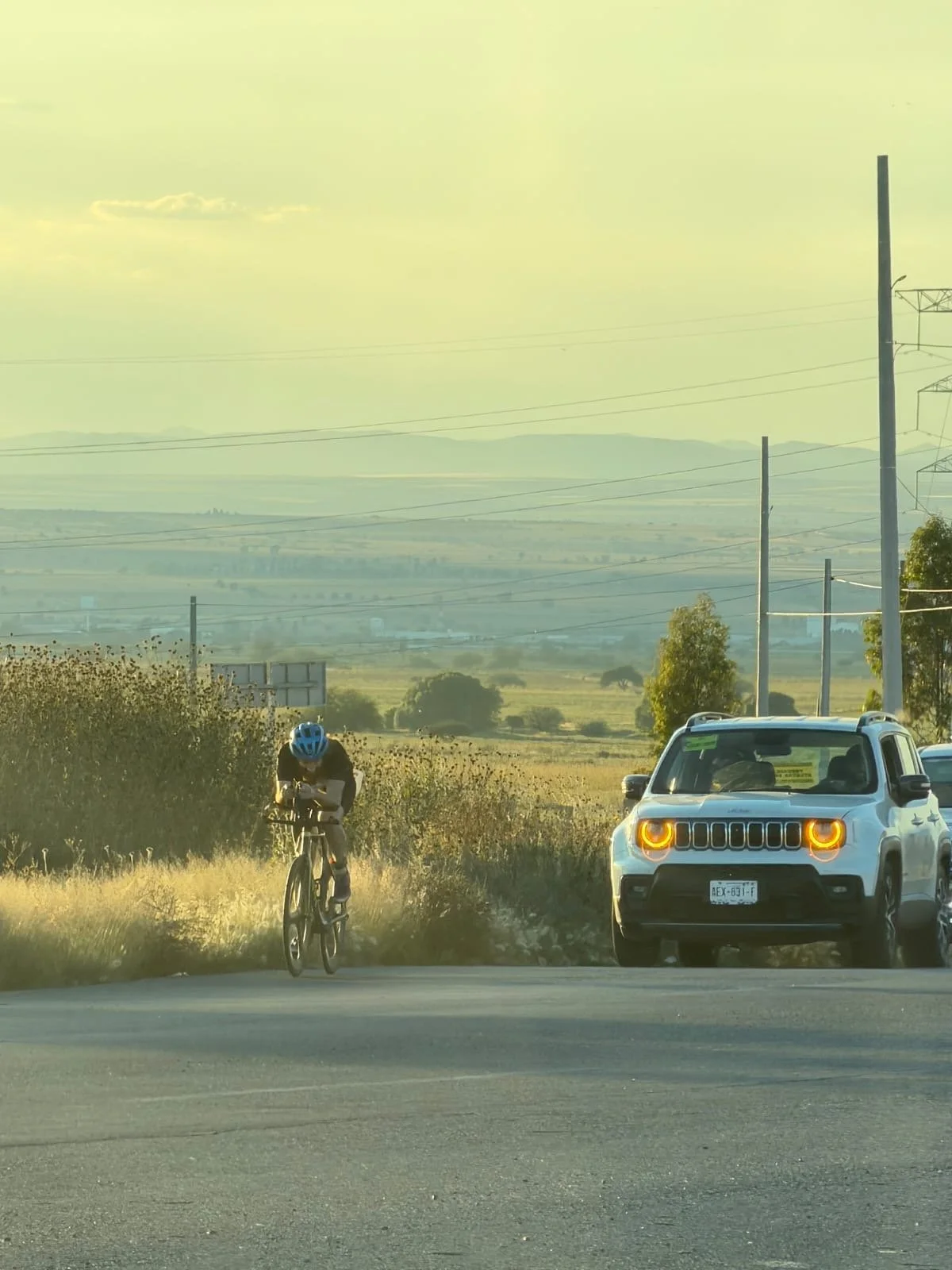
On downhills and flats, I rested in aero. On climbs, I had to drop back down to the handlebars. I would move the right arm first, then put all my weight to the right and rotate my whole torso to bring the left arm down with as little arm movement as possible.
Even with the careful transitions, every movement sent a flash of pain. Bones moving in and out. Scraping. Shifting. Every rumble strip, every speed bump, every crack in the road sent shockwaves through my shoulder.
Renée and Korbin could hear me yelling from inside the Jeep.
They realized quickly that I couldn’t eat or drink on my own. I couldn’t put weight through my left arm to reach back with my right. I couldn’t reach with my left at all.
So instead of stopping every ten kilometers, they started pulling over every few. They would jump out of the Jeep and sprint toward me. Korbin would run alongside with two bottles, hook one into my mouth, and squeeze while jogging. Then peel off when I reached Renée with food.
That became our aid station routine for the rest of the race.
Kokua
The opportunity to keep going was only possible through the generosity of my fellow competitors.
The Canyon Speedmax I was riding was the nicest bike I had ever been on. It was lighter, faster, and closer to my size than the old Felt I had started the day on. But the most important difference was not speed. It was the electronic shifting. Being able to change gears with the press of a finger, both in the aero bars and on the base bars, saved me an enormous amount of pain. With the injuries I had, even if my own bike had survived the crash, I don’t think I could have managed mechanical shifting confined to the aero position.
The hours between the crash and the turnaround were chaotic, and I didn’t even know who had given me the bike until later. At one aid station, Korbin leaned in and told me I was closing on the rider who had lent it to me. Isaiah was just ahead.
When I pulled up beside him, he was all smiles. He was genuinely excited to see me and cracked a joke about how good the bike looked. We rode together for a short stretch, trading encouragement back and forth. His energy was infectious.
“Ride on,” he told me. “I’ll see you at the finish.”
I promised to meet him there and to bring him a beer the next day as payment for letting me ride the bike.
That moment carried me through the miles of rolling highway that followed. Not because I was racing anyone, but because someone had chosen to help, and the race was still alive because of it.
Police Escort
That rolling stretch of highway went on forever. Unlike day one, I didn’t have my bike computer anymore. It had been crushed in the crash. No speed. No distance. No heart rate. No map.
I was riding blind.
The only instructions I had came from my crew yelling out the window. When we took an exit, I felt a flicker of relief. I remembered the course map and knew that stretch of highway had been long and exposed. Maybe we were through it.
Then they yelled for me to pull over.
We had taken a wrong turn.
We needed to get back onto the main highway, and the only way to do that was over a concrete median and up the on ramp. They lifted my bike over the waist high barrier. I turned my back to it, jumped my hips onto the top, and swung my legs over.
I stood there with one of the officers while they drove ahead to find a way to bring the Jeep around. Time kept moving. I ate and drank what I could. I tried not to think about how much time we were losing.
When they came back, Korbin told me a motorcycle cop was going to guide me.
I climbed back on and followed him down the middle of a busy highway. Rush hour was building. Cars on both sides. I tried to stay close to the flashing lights ahead of me as traffic parted around us.
It was surreal.
Eventually we reconnected with the course and rolled back onto the familiar red road to the town before the final climb. We had burned more time and the hardest part of the day was still ahead.
I was willing to pedal until I physically couldn’t anymore. And if I lasted long enough, I was willing to pedal until they pulled me from the course. I just didn’t know if it would be enough.
Izquierdo
Korbin yelled out of the Jeep:
“You’re only five minutes behind the pace you need to finish! You have to fucking go faster!”
I didn’t know how. I was barely keeping the bike upright. I had been trying to avoid potholes and speed bumps to minimize the pain, but there was no time left to be careful.
Slow or fast, it hurt either way.
It might as well be fast.
We wound through town. Dogs ran into the street. My crew missed a turn behind me. People were shouting at me. It felt like everything was happening all at once.
At the top of the climb, a motorcycle cop stood at the intersection, shouting:
“Izquierdo! Izquierdo!”
But I was so overwhelmed by the climb and the pain and the noise that the word meant nothing. I had known it five minutes earlier. In that moment, I couldn’t remember.
I didn’t see the Jeep. I didn’t see Korbin or Renée. I had no idea which way to go.
So I pedaled slowly across the road, perpendicular to traffic, stalling for time and waiting for something to make sense.
Then the Jeep shot across the intersection.
“Left!”
Eye of the Tiger
I had come to the beginning of the end. The final climb up La Bufa. The day one finish felt hard. Now it seemed impossible.
The terrain here stripped everything down to effort. There was nothing to manage or optimize. Just climb. Just keep turning the pedals over. It was some of the purest riding I’ve ever done.
Luiz and Lara were in the staff vehicle behind me, honking and cheering. At one point they pulled alongside with “Eye of the Tiger” blasting out of the speakers. I felt like I was in a movie. This was the most painful fun of my entire life.
I was emptying the tank. Completely spent. I felt almost outside my body, watching myself climb from somewhere else.
They filmed some of it. Now my memory of that climb lives halfway between what I felt and what I see in the video.
Somehow, in that state, I made it to the top.
The Descent
From the top I could see the sun was nearly below the horizon. For the first time since the crash, I believed I might make it.
I was on a borrowed bike.
No headlight.
No glasses.
A broken shoulder.
I had no idea how much time I had left. I only knew that whatever time remained was disappearing fast.
I got as low as I could, holding my left arm steady on the aero bars and dropping my right hand to the brake. Whatever grip I had, I would have to trust it.
I bombed down the mountain, over fifty miles an hour. Darkness was settling in. The road ahead was mostly invisible, lit only by the red and blue police lights flashing behind me.
Every second mattered.
I remembered the shape of the finish. One roundabout. One final turn. I aimed for that picture and committed.
I hit the roundabout, and cut left half skidding. Then the finishing chute appeared.
I sprinted the last stretch through the chute with everything I had left.
Minutes to Spare
People were going nuts. Cheering, yelling, clapping. I don’t even remember unclipping but the bike had disappeared.
I started screaming.
“I’m like that!
I’m like that!”
I pumped both fists in the air. For a brief moment all the pain and fatigue was gone.
Right then, I did not care.
I had finished day two with less than ten minutes to the cutoff.
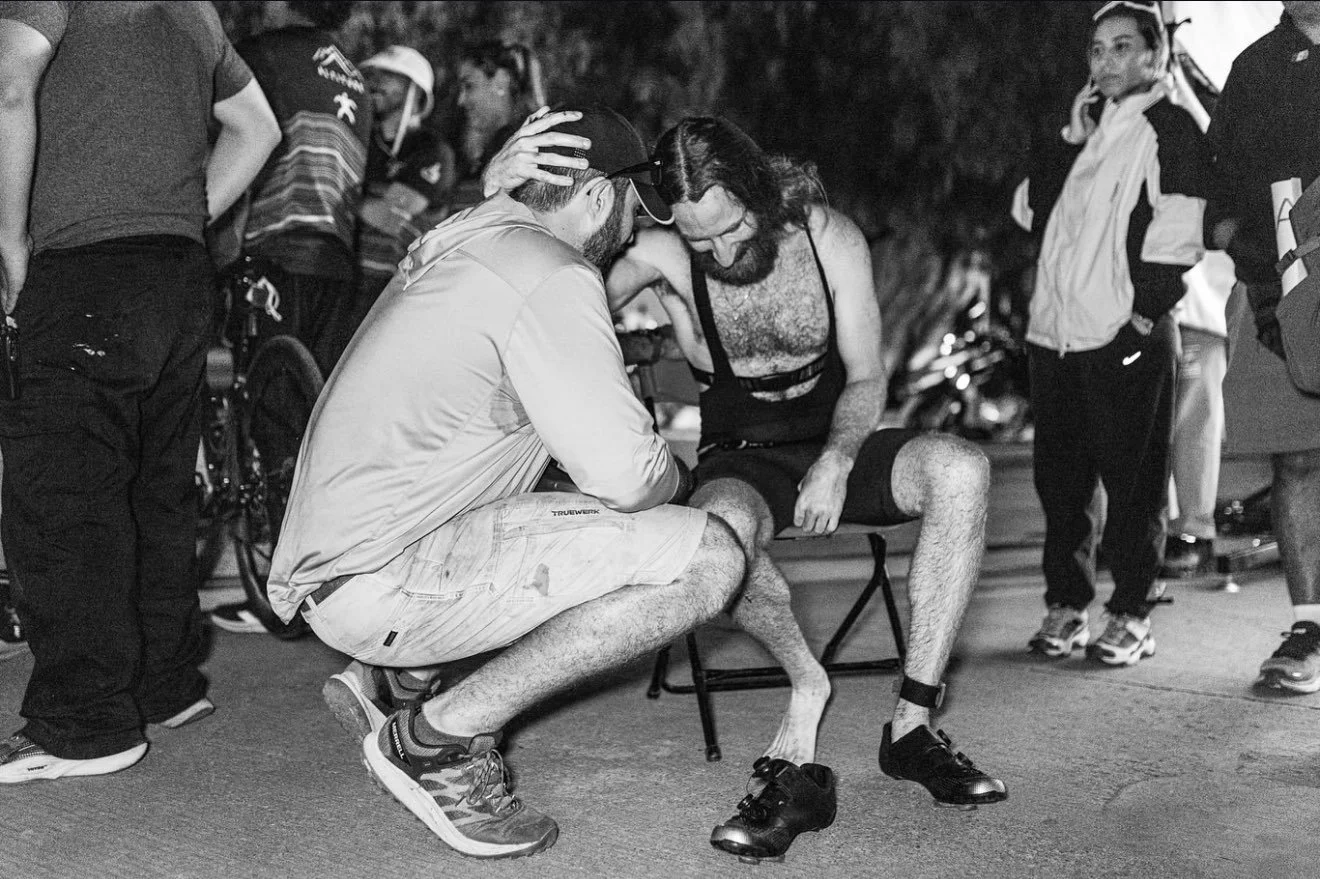
People swarmed me. Hugging me. Slapping my back. Hitting my shoulder by accident. The pain came all at once. My knees buckled and I hunched over, my arm pinned to my side in a crowd of people.
When Korbin came over, and then Renée, something finally broke. I started sobbing. There were no words left. I was completely emptied out, physically and emotionally.
Then Isaiah came in and all the energy came back. He finished with less than a minute to spare. He stood up on the bike, and I ran over and hugged him with one arm, thanking him. Without his bike, I would not have had a chance to finish that day.
Night Two
Back at the house, the physical reality of what had happened began to settle in.
I could barely move. There was a double marathon starting in less than twelve hours. Whatever decision we were going to make, we knew it couldn’t be made in that state.
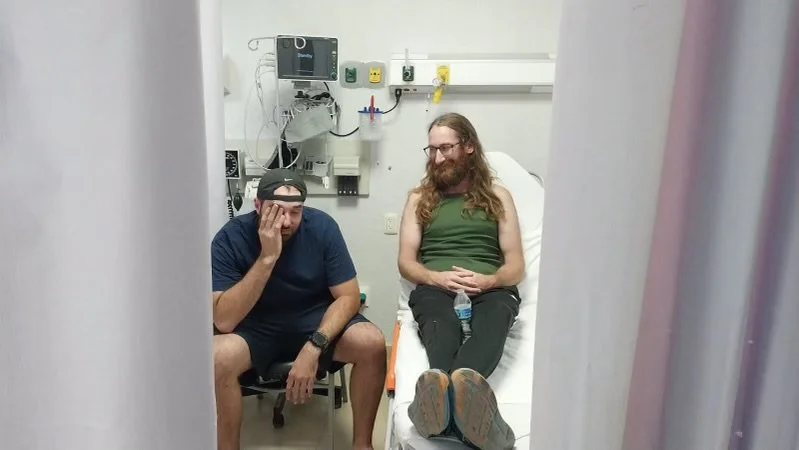
We called Van, and he told us to go to the hospital the race had a relationship with and get checked out.
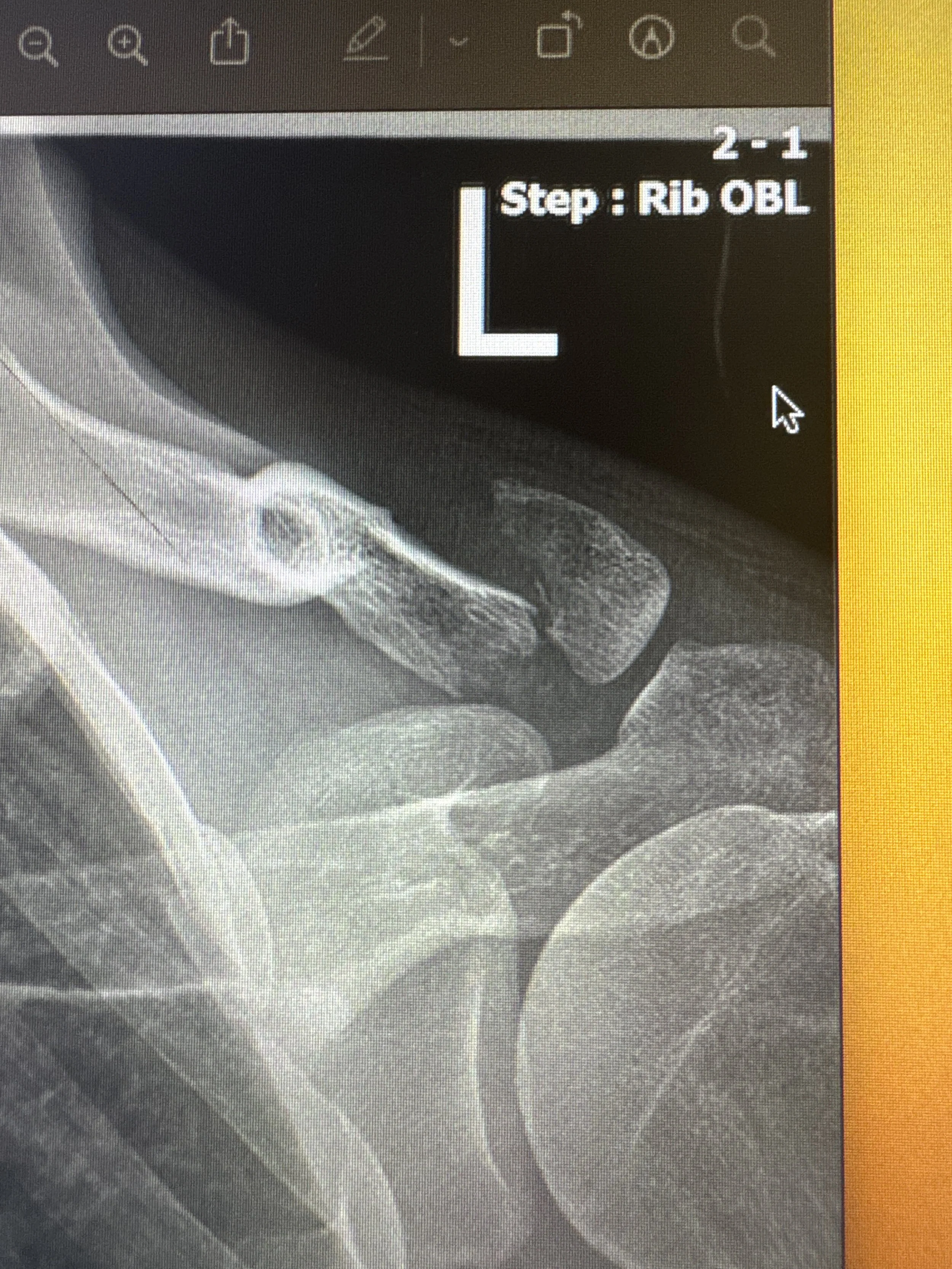
The X-rays confirmed what my body already knew. I had broken my clavicle. That grinding and shifting sensation on the bike had been the broken pieces moving against each other. The distal end was fully separated.
The doctor was clear. I could not run.
Looking at the images, it made sense. Even so, we didn’t decide right away. We kept the decision in our back pocket overnight. See how it feels in the morning. Be ready to go to the start line if something changes.
By morning, it was obvious.
I was having real difficulty breathing. Real difficulty moving at all.
We went to the start to see everyone off. I had taken painkillers, which helped a little, but my ability to move was still severely limited. Part of me still wanted to toe the line and see how far I could go. If I DNF, I DNF. That thought hasn’t left me.
But the doctor had been direct. If I didn’t already need surgery, attempting to run would guarantee it.
As a group, we decided not to risk longterm damage or a trip back to the hospital if something went wrong. We accepted the DNF and put our energy into supporting the athletes who were still racing.
Aloha, Ohana, and Kokua
We brought Isaiah a beer at the start line. A tiny Coronita. We had DoorDashed Coronas and didn’t realize they would be the small bottles. I’ll have to get Isaiah a proper beer at next year’s race.
Later, we drove sections of the course, cheering runners on and watching people grind their way toward the finish. It was powerful to see the race as a spectator, but it stung. Seeing person after person cross the finish line was a repeated reminder of how close we came.
Isaiah had some injury issues on day three, but he handled them with grace. To me, he embodied the spirit of Ultraman. His generosity. The way he helped others. The way his whole presence communicated positivity without words. He made a big impact on me. And without his bike, I would not have had the chance to finish day two.
Finishing day two was more important than any race I have ever done. It brought me into a zone of personal exploration I hadn’t experienced before. It opened my mind to what is possible.
A new bar has been set.
Day four was the awards ceremony.
They brought all three of us up on stage with Isaiah and his crew to present him with the Kokua Award, one of the three spirit awards at Ultraman. Aloha. Ohana. Kokua. Kokua is the award for help and service. It is one of the core values of the event, rooted in Hawaiian culture.
It was incredible to see him receive that award. To take pictures together. To share that moment. It made me feel like I was truly part of the Ultraman family.
Recovery
I am going to wrestle with the decision not to start day three for a long time. When I got back to the United States, I had more scans done. Along with the broken clavicle, I had three broken ribs and a broken finger.
But in a way, all of that is beside the point.
I had an incredible experience. It was transformative. I decided to pursue Ultraman because I knew the process would teach me about myself and change me in the process. I never could have known how significant and far reaching those changes could be.
I am not back to full training yet, but physical therapy is going well. I do have to get the broken piece of clavicle removed at the start of 2026, but I will make a full recovery.
In 2024, I wrote down my goal of becoming an Ultraman World Champion. I did not expect to do any Ultraman events in 2025, and I didn’t think there was any possibility of going to Hawaii before 2027.
Now, as I enter 2026, I am planning for multiple Ultraman races and to qualify for the World Championship.